There's a point in every market where pricing stops being the thing. Not because price doesn't matter. Obviously it matters. But because eventually… everyone ends up in the same range.
The products get good enough. The features start copying each other. The pricing pages start looking like identical twins. And once that happens, the winner is not "who's cheapest."
The winner is whoever owns attention.
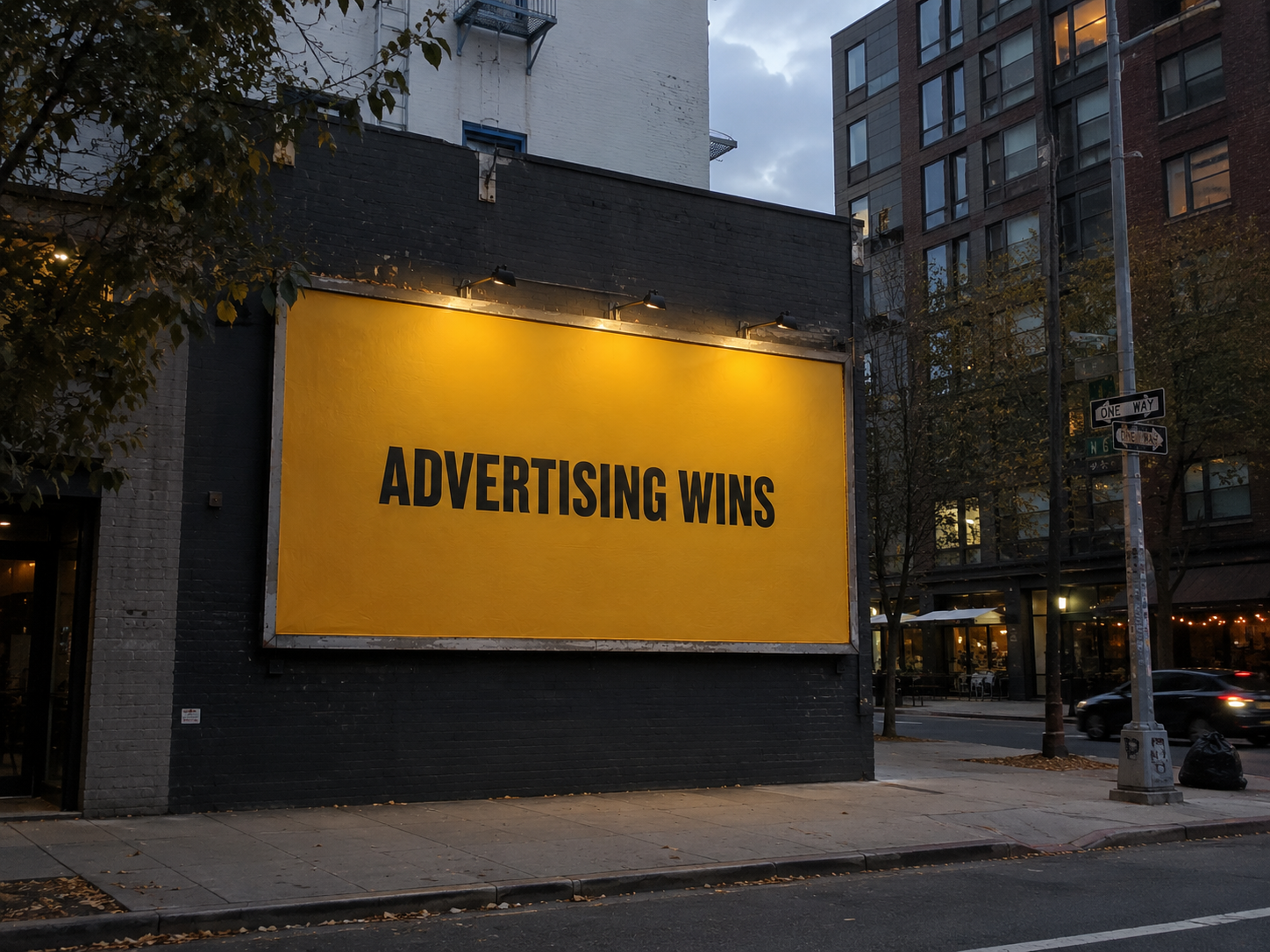
Which is another way of saying: advertising wins. This has happened before. A lot.
Grocery stores made products a commodity. TV made brands rich.
Go back to the golden age of consumer packaged goods. Early on, you could win with distribution or manufacturing. If you made better soap, you won. If you made cereal cheaper, you won. Then grocery stores scaled.
Chains got bigger. Shelf space exploded. Suddenly you weren't choosing between three options. You were choosing between fifteen. And here's the secret: most of them were basically the same.
So what did Procter & Gamble do? They didn't sit around arguing about whether Tide should be $7.49 or $7.29. They bought television. They spent absurd amounts of money making Tide feel inevitable. Not "the best detergent by objective measure." Just… the one you know. The one you trust. The one your brain grabs when the aisle is chaos.
Once pricing flattened, branding became the weapon. And TV became the money printer.
DTC was supposed to be different. It was not.
Fast forward to direct to consumer. At first it looked like a revolution. Cool brands. Better products. No middlemen. Everyone thought we were breaking the old system.
Then Shopify made starting a brand take fifteen minutes. Then factories made copying a brand take another fifteen. Then the internet filled up with 400 identical "premium essentials" companies. Mattresses all sounded the same. Razors all sounded the same. Skincare brands all had the same beige packaging and the same origin story.
Pricing compressed again. So where did the battle move? Meta, Instagram, and Facebook became the mall.
If you were a DTC brand, you didn't grow because your toothpaste was meaningfully different. You grew because you could buy attention. And Meta didn't care who won. In fact, Meta loved that nobody could win easily. More competition means more ads. More sameness means more storytelling. More storytelling means more spend.
Advertising won again.
B2B software is next, and everyone is pretending it isn't.
Now look at B2B software. We are walking straight into the same thing. AI is flattening feature gaps. Every tool is adding the same "assistant." Open source is catching up. Cloud made distribution irrelevant years ago.
Pick a category.
- HR tools.
- CRMs.
- Marketing automation.
- Data platforms.
- Project management.
There are like twelve "best in class" options and they all do 85% of the same stuff. Buyers know it. Founders know it. Procurement definitely knows it.
Most B2B software is already commoditizing. We just hide it behind demos and jargon. So what actually drives the decision? Trust.
I've heard of them. My peers talk about them. They feel credible. They show up everywhere. They seem built for people like me. That is not product differentiation. That is marketing.
B2B advertising is about to have a huge moment.
When markets get crowded, buyers don't want more choices. They want someone to tell them what's real. And even more so when the price point is $$$.
Advertising is how markets educate themselves at scale. Not lead gen spam. Not download our whitepaper. Not boring brands with worse ads. Real presence. Real voice. Real distribution.
B2B has mostly sucked at this historically. The ads were boring. The content was written by committees. Everything sounded like it was approved by legal. That era is ending.
As competition explodes, the companies that win will be the ones who can actually earn attention and build belief before the sales call ever happens. And the biggest winners might not even be the software companies. It'll be the platforms and voices where discovery happens.
Because when pricing stops doing the work, advertising takes over. It always does.